
Skirting on the bottom of the chicken run. Vacuuming the cold air return. Renewing my driver’s license. Organizing this stack of business cards.
How long is your list of things you know you need to do but keep forgetting to actually cross off the list?
How many people do you know who say this about building a get-home bag for their vehicles or a go-bag to have ready for evacuations or emergencies?
Even with the recent focus on preparedness and staying ready for emergencies, I talk to far more people who know how valuable that car bag is and want to get it done than actually have one in their vehicle.
And that’s your opportunity. Capitalize on the “need-to” of your customers, and your ability to source supplies at dealer prices, to offer an easy solution that nets you a solid return.
You need to start building one-size-fits-most get-home bags.
What’s a Get-Home Bag?
Let us first make sure we’re talking about the same thing. A get-home bag is not a 60-pound ruck you are going to use to get off the grid for two weeks while you wait out a zombie apocalypse.
A get-home bag is a medium-sized pack that you can easily keep in a vehicle that has emergency items not part of your EDC that you may need should your vehicle become disabled, you are forced to abandon it, or an emergency happens.
The goal is to add functional items that may be needed in a pinch to the vehicle so they are always there. When the need arises, simply go to the bag and deal with the situation.
There are certainly wrong ways to build a get-home bag, but there isn’t just one right way. Since this bag is primarily designed around supporting an emergency in a daily commute, it is going to depend on what that commute looks like. Be ready to adapt this list based on where you are geographically. Central Florida probably needs bug spray. Western Montana could benefit from snow cleats. This is a starting point. You know your area and customers and can make any adjustments you think may be of use.
What Bag Should You Use?
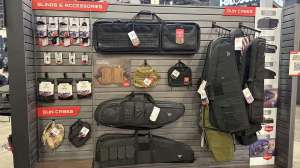
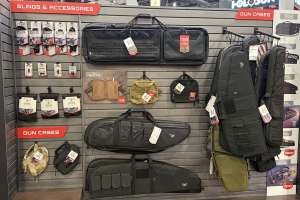
This doesn’t need to be much more than a backpack, and the more casual it looks, the less attention it will draw. It should be a pack configured to be worn, not carried. Backpack, not range bag.
You’ll often see this kind of bag have a tactical vibe with MOLLE straps and patches and all other manner of attention-grabbing aura. I would caution against that, especially if this bag ends up in an SUV where it may be visible to those peeking in windows. I always go for more of a diaper-bag vibe. Casual, non-threatening, and doesn’t make anyone think that breaking into the vehicle may yield an unsecured truck gun.
Because you don’t know the conditions in which it may need to be used, you want to make sure it doesn’t draw a lot of attention while your customer is using it as well. The more everyday it looks, the less attention it will draw. That’s a good baseline for the bag itself that you choose to build around.
What Goes in It?
A get-home bag should address several general categories of items:
Defense/tools Food/Water Fire Shelter Lights Medical AOG (all other gear)
Let’s talk about each category and what we may want to include.
Defense/Tools: Some people call this category weapons, and that may be fine when building from scratch, but I don’t think it applies as much for a pre-built generic get-home bag. If someone carries a gun every day, they should have that with them. If they want to add a pocket pistol to the bag after they buy yours, that’s a fine addition that makes a lot of sense, but I don’t think you should make it a standard inclusion just because of the variables that exist. That’s in addition to the fact that this is a bag that stays in a vehicle, and I am decidedly against leaving a firearm unsecured in such a manner.
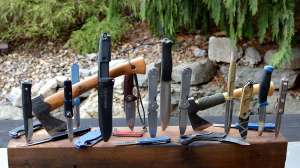
What does make sense to add is a good knife and a multi-tool. Yes, both. While every multi-tool has a blade or two in it, I’ve almost never been a fan of using that particular tool. The handle often makes using the blade of a multi-tool somewhat awkward for strenuous tasks. For that reason, a quality knife should also be included. In general, fixed is better than folding, but that does take up a little more room.
For a small fixed utility blade, I’ve become a big fan of the Outdoor Edge Pivot with the Wharncliffe blade. It’s small enough to be worn on the belt without discomfort or to slide in a pocket, with the added rigidity of being a fixed. For an affordable folder that will do work in a pinch, the Gerber Paraframe is tough to beat. The frame cutouts keep it lightweight, and it fits most hands pretty well.
Food/Water: This isn’t a two-week backcountry pack. This is to get you home from a daily commute. As such, I think the idea of food or water is somewhat overrated. It’s good practice to travel with a bottle or water, and that should be all someone needs for a daily commute. Packing water, especially in freeze areas, can just make for a mess.
Same with food. A week’s worth of Mountain House is bulk and weight you don’t need unless you’re commuting a couple hours a day.
In my own bags, I do keep a few non-chocolate (to avoid melting) protein-type bars — mostly because there’s a high probability my boys will be with me. At 5 and 7, they are somewhat less tolerant of hunger than I am. If we need to hammer out eight miles to get home, they may need a snack.
Water is more important, so maybe a Lifestraw or something similar will appeal to your customers, but I think this is something they can add if so desired.
Fire: It’s always good to have means for creating fire. A standard BIC or two, waterproof matches, and some emergency candles are a solid addition. If stuck in a snow storm or something similar, a small candle puts out an amazing amount of light should you choose to stay in the car until conditions clear and can alert passersby to someone being in the vehicle.
Shelter: Paracord, a plastic poncho for everyone reasonably expected to be in the car, and a couple of space blankets give you a lot of flexibility for the type of situation we’re talking about. More often than not, you shouldn’t have to actually erect a shelter in this circumstance, but it might be raining for your walk home. If something wonky does happen, you’re equipped. And if you have to hunker down in the car, you should be more comfortable.
Lights: Ideally, most folks would have a small flashlight as part of their EDC, but we know that isn’t always the case.
I think it’s a good idea to have three distinct types of lighting as part of a good get-home bag. First, you should have a quality handheld light. I’ve been carrying the Streamlight Macrostream USB for a while now and love that light. It’s the perfect balance of size and performance. The new Megastream from Streamlight would be a good option as well if you wanted to lean towards something a little more robust. It’s still compact at right around 5.25 inches in length, but it offers 1,800 lumens of output.
A headlamp is also wise. Your buyer may be moving in the dark, and being able to do so hands-free is a big bonus. I like the AA or AAA-powered units. Often these come with batteries included in a plastic shrinkwrap that allows them to be stored in the battery compartment without running the batteries down. Should I need it, I can break it open, remove the wrap, and have fresh batteries.
The last is a small work-type light. I’ve become obsessed with the Streamlight PocketMate of late. As is so often the case, it’s the little things that make the big difference. The carabiner-style clip on the Pocketmate allows it to be clipped on a zipper, like on the bag itself, or maybe on a jacket or vest. With high and low modes, it allows you to have a smaller hands-free light for lighting tasks like tying knots or tending a wound, without blowing out your night vision with a high-lumen beam right in your eyes.
Medical: This is the most important category because it’s often where people skimp. This is going in a vehicle. Car crashes are one of the most random and frequent traumatic events in our lives. It only makes sense to have quality medical gear, including trauma response gear, in such a bag.
Of course, you need the snivel kit. Bandages and small alcohol wipes to clean wounds are a must, especially if you have kids. Infection can set in quickly, and making sure you have the equipment to keep even small wounds treated is wildly underrated.
Other minor medical equipment you can include to show how robust the kit is are things like cotton swabs, steri-strips, nail clippers, tweezers, antibiotic ointment, chapstick and sunscreen. All in small travel-size quantities to make sure they are packable, but present.
Wounds suffered in a car accident, however, often aren’t solved with just a bandage and some ointment. No fewer than two quality tourniquets should also be in the bag, along with a chest seal, gauze pads, and a roll of quality packing gauze and medical tape. And remind buyers that if they don’t know how to use these items, it’s time to take a first-aid course.
In my bags, I also keep a roll of CoFlex self-adhesive bandage. We practically had stock in the stuff when I was in the horse world. If you aren’t familiar, it’s a stretchy, slightly adhesive bandage that sticks to itself. If you need to wrap up a wound on a weird location or at a joint, it often does a better job than traditional bandages or tape.
Don’t skimp on the medical gear. Even if you aren’t stranded or injured yourself, you may be responder zero to an accident, and having trauma tools with you that you know how to use, may mean life or death for someone else.
All Other Gear: It would be easy to go crazy adding things to a get-home bag, but keep the intended scope in mind. Ideally, you aren’t having to ruck more than 20 miles in a worst-case scenario. That won’t be a fun day by any means, but that should be a one-day endeavor or close to it. Pack accordingly.
Other items that have utility so I keep them in my bag, and have some curb appeal that may help move the bags in your shop, are things like chem lights (or glow-sticks) for signaling, chemical hand warmers, and a small AM/FM radio.
You may also consider adding to the bag a small battery for recharging phones. I exclude this from my back because my vehicles also have a rechargeable jump starter with USB outputs I can use for electronics. I can just slide this in my bag if I have to leave my vehicle.
You might also leave room for, and include a list of things the customer should add that are fitted more for them. Things like extra socks, gloves, and a hat take up very little room but can make a world of difference if the bag is called into action.
Sell Preparedness
Customers like solutions that are ready-made. By providing something they likely already know they need, not something they want, the opportunity for sales is strong. Bundling everything together with a few headliner options presents a solid opportunity for captured margin as well.
As a bonus, I would recommend hosting a class, if your shop is able, to go through the bag, explain items, and provide training on the value of some of the contents your customers may have less experience. It wouldn’t hurt to add a first-aid component to this course.
As always, presenting your shop as a resource with value beyond simply selling things is never a bad idea.