
If there is one thing I have learned as an outdoor writer, it is that serious shooting enthusiasts are finnicky — authenticity matters. Knowledge is power, and much like a job listing, experience is preferred. This is abundantly true in more extreme shooting pursuits. I bowhunt for the same reason I prefer long-range shooting. It’s the same reason I joined the Marine Corps. We prefer to be challenged, and precision shooting at extended distances scratches that itch for a growing number of shooters. Of course, shooters at all experience levels are never truly done learning. I may have less, more complicated questions than a new shooter; however, as a seasoned long-range shooting veteran, I still have them.
The simple truth is that all of us are looking for answers and information to enhance our decision making, from purchasing good gear to pushing the envelope on long-distance accuracy, including circling back to shooting fundamentals, understanding optics and navigating environmental conditions. As retailers, you should take a vested interest in the growing sport of precision long-range shooting and seek to expand your knowledge and experience on the subject. Become the front-facing industry professional shooting enthusiasts trust. Having answers and the right products is the obvious solution to precision-shooting related sales. As such, consider these seven tips for highly effective shooters, followed by a roundup of gear you should seriously consider for retail space.
Back to Fundamentals
I am not the first or the last to acknowledge that not all military-trained shooters are great; in fact, countless troops are mediocre shots at best. That is not to suggest all military firearm training is terrible. Advanced courses are exceptional; Marine Corps snipers are a great example. Unfortunately, very few Marines (or troops in any military branch) receive that type of advanced shooting instruction. Even so, at least in the Marine Corps (the only branch in which I have experience), training elements of fundamental shooting are definitely on point. The most comprehensive lessons are shooting positions, sight picture, sight alignment, natural point of aim and B.R.A.S.S.
Shooting Positions
When possible and gear aside, accurate shooting begins with a stable position. Aside from a shooting bench, there are shooting position categories: standing (off-hand), kneeling, sitting and prone (laying down). Shooting with manufactured support is generally the most stable; in fact, any shooting position providing rear-to-front support while minimizing muscle engagement is best. Prone is the most stable shooting position, followed by bench rest. Those two positions aside, other physical positions ranked best to worst are sitting, kneeling and standing. Most long-range shooters employ adjustable bag-riding systems, monopods or squeeze bags under their stocks and premium bipods up front. Many precision shooters, especially for extended or extreme distances, also use bipod extenders to maximize their rifle’s footprint.
Natural Point of Aim
Once a shooter assumes a solid position, acquiring a natural point of aim is also important. The best way to learn to acquire a natural point of aim is from the prone position. Assume a wide and low prone position, toes facing outboard with ankles on the ground, with the body lined up behind the rifle to absorb recoil impulse. Once the position is established, the shooter should aim downrange at a target, close the eyes, breathe in and out a few times, relax and open the eyes again. The reticle should remain on target. If left or right, the shooter should adjust the hips left or right to properly establish the natural point of aim, not simply push the rifle toward the target — always adjust the body, not the rifle. Elevation adjustments can be made by adjusting a bipod and/or bag-rider or monopod, or by squeezing or relaxing the grip on a squeeze bag. Natural point of aim is only established when closing the eyes — breathing and relaxing does not take the point of aim off target.
Sight Alignment and Sight Picture
Once the natural point of aim is established, sight alignment and sight picture follow. While sight alignment has largely been an open/fixed sight topic, it can also be applied effectively to optics. Sight alignment with an optic is simply to achieve consistent viewable ring thickness in the rear while keeping the reticle centered in the field of view. Sight picture simply establishes that the shooter should focus on the crosshair, leaving the target downrange a bit blurred.
B.R.A.S.S.-F
With natural point of aim, sight alignment and sight picture settled, shooting follows; however, following a tried-and-true order of operation is critical. In the Marines, we used an acronym, B.R.A.S.S. The letters stand for: Breathe, Relax, Aim, Stop, Squeeze. When preparing to take a shot, the shooter should breathe in and out deeply and relax. When ready, the relaxed shooter should take another deep breath and exhale, reaching a natural respiratory pause (this is the stop). At the natural respiratory pause, the shooter has roughly 6 to 8 seconds to squeeze the shot off. Once the rifle fires, the shooter should follow through by maintaining their shooting position until the round impacts. Some refer to this entire process as B.R.A.S.S.-F.
OPTICS: FFP, SFP, MOA and MRAD
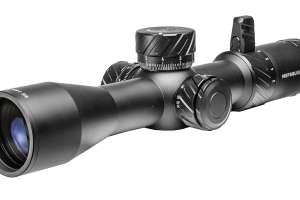
As retailers, understanding optics is also important. In long-range shooting, the most basic topics are adjustment and subtension values, and reticle focal planes. In a nutshell, the most popular adjustment and subtension values are minute-of-angle (MOA) or milliradian (mil or MRAD). One MOA is 1.047 inches at 100 yards, while one MRAD is 3.6 inches at 100 yards. Often, MOA precision scopes feature .25-inch-per-click adjustments at 100 yards, while MRAD scopes adjust at .1 mil per click (.36 inches) at 100 yards. For each, the math simply extends out. As an example, a .1 mil click adjustment would shift a point of impact over 1.8 inches at 500 yards and 3.6 inches at 1,000 yards.
Optics also come with first- or second-focal-plane reticles. Many long-range shooters prefer first-focal-plane (FFP) reticles; however, they are generally more expensive. A first-focal-plane reticle increases and decreases in size commensurate with increasing or decreasing magnification power. This means the subtensions (windage and elevation hashmarks on a reticle) retain the same mil or MOA values throughout the range of magnification. As a result, the reticle also becomes an effective rangefinder for engaging targets at unknown distances. Conversely, a second-focal-plane (SFP) reticle remains the same size through the magnification range. This means the subtension values are only accurate to mil or MOA at a single magnification power, usually the highest. SFP reticles cannot be used to determine target distances but are ideal for shooting at known-distance targets.
D.O.P.E.
D.O.P.E., referred simply as dope, is an acronym for “Data Observed in Previous Engagements.” Each time a shooter hits the range, and for each trigger pull, equipment and environmental conditions should be recorded, as well as shot placements. Repeated shooting in varying conditions with a consistent cartridge/load selection produces a report to help you determine windage and elevation adjustments at varying yardages in future similar conditions. These records are your dope. Using dope makes long-range shooting easier by shedding light on ballistic drop at varying distances, windage adjustments at a variety of wind speeds and directions and how other conditions like equipment and environmental temperature changes, altitude and humidity affect flight. Dope is often kept in a “data book” and is a great reference on the range. Moreover, competitive shooters often determine weather and equipment conditions and refer to their dope to establish drop charts printed and applied to stocks, wrist bands and even to the insides of flip-up lens covers for competitive shooting matches and longer-range hunting.
A Precision Shooting Product Roundup
Circling back, why are these foundational shooting premises important for retailers to learn? The answer is simple. To sell to the finnicky precision-shooting crowd, you should know your subject matter. Your customers depend on you for the answers they need to make informed purchasing decisions. Being trusted professionals capable of answering some of these questions and recommending products builds trust between you and your customers and pays off in dividends when it comes to sales as well as customer retention. One additional component, mentioned above, is offering the right types of long-range precision shooting products. Consider these products for your retail shelf space.
Accuracy Solutions ORCA Chassis
Accuracy Solutions already is a household name among the world’s best shooters. The brand has built a trust and respected reputation with aluminum F.A.S.T. chassis and BipodeXt bipod extenders; in fact, in recent years, most final-stage shooters utilize Accuracy Solutions products at world championship matches like the King of 2 Mile Match at NRA Whittington Center in Raton, New Mexico. So, the recent unveiling of Accuracy Solutions’ new ORCA chassis came as no surprise — the company has quite the innovation track record.
ORCA chassis are constructed entirely of micarta, resulting in dead-in-your hands recoil impulse, mitigated thermal expansion and contraction and ridiculously superb balance. ORCA chassis also boast an integrated BipodeXt bipod extender system and the most versatile, adjustable stock system I have experienced in its class. While ORCA chassis are designed for extreme long-range shooting, most long-range shooters opting for shooting magnum cartridges out to 2,000 yards or so should opt for Baby ORCA chassis. As a retailer, the Baby ORCA is the sweet inventory spot. www.accuracysolutions.com
Aero Precision SOLUS Chassis
I recently had the good fortune to build a short-action magnum rifle chambered in 6.5 PRC on Aero Precision’s SOLUS Chassis, incorporating a SOLUS action, BSF carbon-fiber jacketed barrel and a Timney HIT Trigger. The result is a superb, lightweight aluminum-chassis rifle system capable of ¼-inch grouping (perhaps better) with Hornady’s 147-grain ELD Match factory ammo — impressive, to say the least. Even better, the SOLUS Chassis, premised on a Remington 700 close footprint, is quite affordable, perfect for new precision-shooting enthusiasts and a great choice for any seasoned veteran’s match-rifle build project. The most affordable chassis in this roundup, Aero Precision’s SOLUS is available in multiple Cerakote finishes with 15-inch and 17-inch M-LOK and ARCA Swiss compatible forends. The SOLUS’ stock includes length-of-pull (LOP), comb and buttpad cant adjustability and a bag rider. www.aeroprecisionusa.com
MDT ACC Premier Gen2 Chassis System
Headquartered in Chilliwack, British Columbia, Canada, with an additional U.S. headquarters in Everson, Washington, MDT (Modular Driven Technologies) Sporting Goods, Ltd. was founded in 2009 to produce affordable chassis offering world-class performance. MDT’s first chassis, the TAC21, was immensely popular; however, chassis innovation has come a long way. A case in point, MDT’s ACC Premier Gen2 Chassis System.
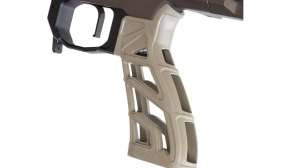
The hard-anodized, 6061 aluminum ACC Premier Gen2 Chassis boasts an integral tall barricade stop, top-forend mounting holes for NV or control bridges, interior weight compatibility, adjustable MDT Premier vertical grip, precision machined MDT SRS-X stock with adjustable LOP and comb height, M-Lok under the buttstock for a bag-rider system, ambidextrous magazine release latch, QD sling cups and AICS magazine compatibility. The Premier Gen2 Chassis is quite affordable for match-rifle quality rifle-built projects and is available in black, flat dark earth (FED) and charcoal green Cerakote finishes. www.mdttac.com
Foundation Revelation Stocks
The pinnacle of heirloom-quality precision rifle stocks, Foundation stocks like the Revelation have been a tried-and-true favorite of mine as well as countless other demanding shooters since 2016. Harkening to authenticity, Foundation Stocks owner John Kyle Truitt is not only the Godfather of micarta precision rifle stocks, he is also a diehard Hornady-sponsored PRS competition shooter and was named PRS Sportsman of the Year in 2021 and 2022. While I prefer the Revelation stock and have built two long-range rifles on that platform (6.5 PRC and 7mm PRC — both routinely hammering sub-¼-MOA groups), Truitt prefers to compete with the Genesis 2. The Centurion is also quite popular in the PRS circle. While Foundation’s offerings look like genuine wood stocks, they are constructed of micarta. This does give them that heirloom look, and building a rifle in such a stock is bound to result in a gun valued by the family for generations to come. They are simply stunning.
Foundation’s Revelation Stock are precision-machined and boast drop-in designs compatible with most actions, a Pachmayr recoil pad with 13-inch LOP (adjustable by requesting spacers), adjustable cheek piece with KMW Loggerhead parts, 11.25-inch Anschutz accessory rail, either single-feed or detachable bottom-metal inlet and five rich simulated-wood finishes. I am in love with “Dark Distressed.” www.foundationstocks.com
Accuracy Solutions BipodeXt Competition Pro Rifle Stabilizer
What is a rifle stabilizer? In Accuracy Solutions’ case it is a lightweight, precision-machined, telescoping bipod extender. Primarily constructed of 3K carbon-fiber, bipod extenders like the BipodeXt Competition Pro Rifle Stabilizer effectively becomes your rifle’s fulcrum, “extending its resting position.” As a result and considering the fulcrum principle, the further out the bipod is extended (up to 26 inches past traditional bipod attachment point), the effect of movement at the toe of the rifle (bottom of the buttpad) is drastically reduced at the muzzle. The BipodeXt also improves recoil management. At the most recent King of 2 Mile Finale, five shooters achieved impacts at 4,258 yards. All five of those shooters employed the BipodeXt.
The BipodeXt Competition Pro Rifle Stabilizer boasts two telescoping carbon-fiber extension tubes, locking QD levers making extensions and cant adjustments quick and easy, and a dual-mount attachment system compatible with Picatinny and Arca Swiss.
Accu-Tac FC-4 G2 Bipod
Just a decade old, Accu-Tac, founded by Felipe Salazar, has become the bipod of choice for the lion’s share of long-range precision shooters. With years of personal experience behind my own Accu-Tac bipods, the FC-4 G2 Bipod has been a staple piece of equipment supporting my mid-size long-range magnum rifles (6.5 Creedmoor, 6.5 PRC, 7mm PRC, 300 Win. Mag, 300 PRC, 338 Lapua, etc.) for shooting out to 2,000 yards with exceptional results. The bipod is the most rugged I have personally employed, and I appreciate its adjustability and extra-wide stance.
Constructed of aircraft-grade billet aluminum, the Accu-Tac FC-4 G2 Bipod features four leg angle positions, five spring-loaded height positions, lockable pan and cant adjustments and multiple foot options. The FC-4 G2 includes rubber foot pads; however, spikes (and claws), sled and P-Ski feet are also available and easy to install. www.accu-tac.com
Long Shot Precision Rail-Mounted Adjustable Bag Rider
Constructed of precision CNC-machined 6061 hard-anodized aluminum, Long Shot Precision’s Adjustable Bag Riders (ABR) are the rear stock support system of choice for scores of top competition long-range shooters. The more universal rail-mounted ABR system is perfect for any precision rifle chassis with a Picatinny rail under the stock. The Rail-Mounted ABR includes .95 inch of travel with the short dowel and 1.48 inches of travel with the long dowel. Once installed, shooters can use the ABR as a rest or install a variety of ABR compatible rear-bag systems. www.adjustablebagrider.com
TriggerTech Diamond Trigger
Considered by many to be the top-performing precision rifle trigger, The TriggerTech Diamond Triggers boast 440C stainless steel internal components and are designed to fit Remington 700 (and clone) actions. Additional Diamond Trigger features include rock-solid Zero Creep Technology for consistently crisp trigger pulls that are adjustable from 4 ounces up to 32 ounces. www.triggertech.com
Timney Hit Trigger
Founded In 1946, Timney’s reputation for producing premium triggers for hunters and shooters is nearly 80 years strong; in fact, most of my hunting rifle projects throughout my adult life included Timney’s famed #510 trigger. Today, however, hunting or precision shooting, my projects often include the Timney Hit Trigger.
The Timney Hit Trigger is an adjustable single-stage trigger system ranging from 8 ounces up to 2 pounds with a ridiculously crisp break. The Hit Trigger features a Sear Engagement Adjustment Lock (SEAL); precision-machined, heat-treated sear and trigger shoe finished in black-oxide. When it comes to value and price point for a premium trigger, the Timney Hit is darn near perfect. www.timneytriggers.com
Remington 700 Actions
Regardless of experience level, time-tested, match-proven Remington 700 actions are always a safe bet. Yes, discriminating shooters may opt for premium actions from the likes of Curtis, Kelbly, Lone Peak, etc. but there is a reason they all offer actions in the Remington 700 footprint — it works incredibly well. Not only are Remington 700 actions affordable, they are extremely smooth and are backed by decades of reliable performance. Remington 700 actions are available in long and short configurations with standard and magnum bolt faces. I couldn’t imagine stocking precision rifle components without offering the one action so many others have followed. www.remarms.com
Aero Precision SOLUS Lightweight Actions
While Aero Precision SOLUS Lightweight Actions fit perfectly in SOLUS chassis, they also fit exceptionally well in chassis calling for a Remington 700 footprint. SOLUS Lightweight Actions are PVD-coated, constructed of 416 stainless steel and deliver exceptionally smooth operation. Solus Lightweight Actions also feature 20-MOA top-rail sections, an integral recoil lug, oversized ejection port, fluted bolt body with three-lug interchangeable head, 60-degree bolt throw, dual ejectors and a two-piece bolt handle. The best actions to stock are .478 for 6.5 Creedmoor and .308 Win., as well as .540 for 6.5 PRC, 7mm PRC, 300 WSM, 300 Win. Mag., 300 PRC, etc.
Barrels
Pre-fit barrels are tough to nail down for a roundup considering the growing list of action manufacturers. My personal blank and pre-fit barrel preferences include Bartlein, BSF (carbon-fiber jacketed), Shilen, Pac-Nor and Criterion. Help your customers determine the right barrels for their rifle projects and order pre-fit based on their action. If you have the machinery in-house, consider ordering blank barrels to be custom-finished based on your customers’ actions.