
Every year, SHOT Show offers a view of where the firearms industry is headed.
From major regulatory shifts to innovation across top product categories, this year’s show offered a clear sense of energy and excitement for the year ahead, with manufacturers optimistic that sales would here out trend upwards despite what many may have previously thought. Whether it was the massive number of suppressors released, the influx of PCCs and SBRs, or the increasingly high-tech world of optics, these trends pointed to a very interesting and exciting year ahead.

Suppressors Take Center Stage
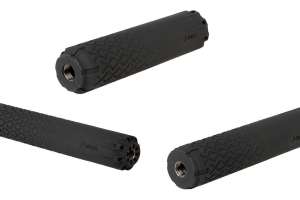
The booths of manufacturers that released new suppressors at SHOT Show this year were consistently jam-packed, which is no surprise given the removal of the once-painful $200 tax stamp. Knowing demand would grow exponentially once the new year rolled around, companies launched a myriad of new products that were lighter, stronger, and more adaptable than ever before. Many manufacturers favored titanium construction, 3D-printed components, and upgrades to their cans' gas management systems. Two sub-themes of this category were the surprising affordability of suppressors, new players to the game, and brand partnerships.
Lyman’s Sonicore Suppressor line was a big hit, especially its .22-caliber suppressor, the Skarv 22, at a low price of $199.00. This can measure 5 inches in length and weighs a mere 3.2 ounces. Its modular construction lets shooters tailor both overall length and suppression performance, offering flexibility through a wide variety of uses. A knurled exterior provides a secure grip for quick installation or removal and helps dissipate heat after running multiple magazines of .22 Long Rifle.
Another popular stop as the week rolled on was at Dead Air’s booth. Ruger and Dead Air teamed up to produce the RXD910Ti. This suppressor comes equipped with a ½ x 28 piston, ensuring immediate compatibility with Ruger models that share that thread pitch and are chambered in any of the suppressor's supported calibers. The collaboration not only expands Dead Air’s overall product offerings but also enables Ruger owners to have a purpose-built option that integrates seamlessly with many models they already own. As successful as this partnership has been, we expect to see many similar partnerships pop up throughout the year.
Accompanying the influx of suppressors into the market were many new options for subsonic ammunition. Companies such as CCI, Remington, Federal, and Barnes were among the manufacturers that released several new subsonic rounds at SHOT Show. These rounds were purpose-built for self-defense, hunting, and general recreation. Lastly, there seemed to be an adjacent theme with new firearms released this year, with "suppressor-ready" becoming the new normal, similar to how we see "optics-ready" as an industry standard for handguns. If one thing is clear, it is that suppressors are quickly becoming a mainstream part of shooting sports, no longer seen as an almost unattainable accessory reserved only for a few.

PCCs, SBRs, and PDWs
Another strong theme weaving throughout SHOT Show was the rise of PCC and PDW platforms. What was once a niche segment of the industry has evolved into a highly competitive, innovative corner of the firearms market. Manufacturers across the board showed off compact, lightweight designs optimized for home defense, recreational shooting, and a variety of other applications.
This trend is driven by shooters who want the controllability of a carbine with the convenience and affordability of handgun ammunition, perhaps in an attempt to reduce the variety of rounds within their ammo cabinet. Modularity was a constant theme with interchangeable magwells, compatibility with various pistol magazines, and other features commonplace, naturally making them appealing to first-time buyers and longtime fans of the platform alike.
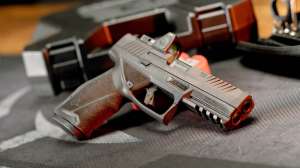
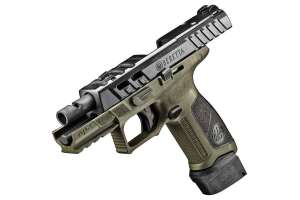
Lastly, catering to those looking to quiet things down on the range, many of these options were released with threaded barrels and thus marketed as suppressor-ready.
Retailers should expect strong demand in this category throughout the year. These platforms hit a sweet spot: compact enough for easy maneuverability, soft-shooting for even new shooters, and customizable enough to satisfy shooters who cannot stop themselves from tinkering with their guns, constantly upgrading and customizing various parts. For retailers, this translates into a seemingly endless opportunity for add-on sales of optics, grips, buttstocks, gun cases, slings, and more.

Advanced Optics
It's been amazing to witness the technological advancements in the optics world over the years, and this year is no different. Common upgrades across the board included things such as faster processors, improved battery efficiency, and enhanced durability, all common and honestly expected.
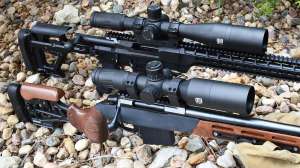
The most impressive feature and a strong trend noticed across all things glass was the technology integrated into many of the optics themselves, whether that be a riflescope or a pair of binoculars. Many manufacturers revealed optics with onboard ballistic calculators, Bluetooth connectivity for sharing data with rangefinders or mobile apps, and advancements within the reticle itself. Closed-emitter pistol optics are becoming more commonplace, quickly gaining ground on their more open counterparts. Shake-awake technology is becoming increasingly common, perhaps even approaching an industry standard in the near future.
Lastly, thermal and digital night vision optics continued to become more accessible to consumers, with price points trending downward. Higher-resolution sensors, improved refresh rates, and a more intuitive user interface were just a few of the features seen in new products being showcased.
Pulsar’s new Symbion DXT50 binoculars are a perfect example of the technological advancements that are possible. While by no means an all-inclusive list, some of Symbion’s features include thermal, full-color day and night vision capabilities, a laser rangefinder, image stabilization, an IR illuminator, and a picture-in-picture mode that allows you to view both thermal and night vision images at the same time.
For retailers, this shift signals an interesting shift in the mindset of firearms enthusiasts, who are no longer viewing optics as a simple sighting tool. Instead, they are viewing optics as part of a larger, integrated shooting system, similar to that depicted in Vortex’s Relay Network. For retailers, this shift in mindset will open up opportunities for additional gear sales, including ballistic weather meters, range-finding binoculars, laser rangefinders, dope logs, optics mounts, tripods, and more.
As the dust settles from SHOT Show, one thing is certain: The firearm industry is evolving and rewarding those who stick it out during tough times when sales may be slow. This year’s trends of suppressors and all things subsonic, the influx of PCCs, and technologically advanced optics represent more than just a few different product categories. These trends represent an opportunity for retailers, should they put in the footwork to properly benefit from it.
By educating yourself and your staff on new releases, scheduling impactful marketing campaigns, and stocking the appropriate gear to adequately meet the needs of your customer base, you'll be setting yourself up for success moving forward.