
You did it. You made the sale. They’re buying the gun.
Sadly, you probably didn’t net enough on that sale to pay for the staff wages that sold it, the lights, the internet needed to complete the 4473, or the upkeep in the shop.
Maybe they bought a of couple boxes of ammunition. You probably aren’t doing much better on that, either.
Accessory sales are essential for keep the doors open and the lights on. These are the products that typically carry enough margin for you to enjoy some profit and not just cash-flow the business. That means you must have the accessories your customers want, even if they don’t know it, that match the products you have, as well as employees that understand the value of add-on sales and mechanisms to activate the customers.
How to Make It Work
If you’re going to make a focused effort to sell accessories, which I think you should, you need to make sure you tick a couple of boxes.
First, you need to align your accessory offerings and price points with your firearm inventory.
Most people aren’t putting Italian marble countertops in shipping-container tiny homes. It just doesn’t make sense. It also doesn’t make a lot of sense to add a $2,000 set of accessories to a $400 rifle.
I’m a militant proponent of the good-better-best system, and if you are doing that with your mainline firearms, you’d better be supplementing that with accessory lines that stand up to it as well.
You can absolutely get away with skipping a good or best-tier product in some categories, but one-size-fits-most is pretty rarely the A answer, and not likely something you’ll be able to drive customers to convert into sales. On the other hand, if you can make the consumer feel like these accessories are absolutely critical to getting the most out of the main product, you have a recipe for larger carts, higher revenue, and more flexibility in pricing.
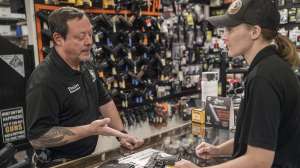
Second, you absolutely have to have the buy-in of your counter employees. Not only that, you have to have employees who are willing to invest the time it takes to be every bit as knowledgeable in the accessories as they are in the firearms. Employees that aren’t making compelling cases to customers about why they need to consider those accessories won’t be as successful in those interactions as those who do.
Now let’s look at those priority accessories on which you should be focusing.
Optics
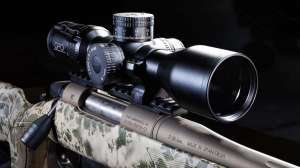
A couple of generations ago, it was tough to find a long gun that was drilled and tapped for optics, and the idea of putting optics on a pistol was something from science fiction. Now, optics are ubiquitous. Most bolt guns don’t even have iron sights, and many pistols are coming optics-ready. Adding an optic to a firearm purchase should be the easiest add-on sale in the purchasing process.
One of the easiest ways to do this is to partner likely optics with guns right off the bat. Leaving a stripped rifle or pistol on the rack or in the case isn’t hurting anything, but you can certainly add to the curb appeal by making it appear as a more ready-for-the-field option.
From an affordable Vortex Strike Eagle or Primary Arms SLX, to the new EOTECH Vudu 3-9x32, finding optics solutions for most any rifle is easily done. When you add in a range of options like Sig Romeo5 and Juliet5, or Riton 1 Tactix ARD and 3 Tactix 3X Magnifier, you have magnified and red-dot options that are easily added and present tremendous value without a ridiculous price tag.
With so many pistols arriving to shops optics-ready, it’s another opportunity not just to sell the optic when just such a pistol is purchased, but to actually display the pistol with an optic as well.
The sheer volume of direct-mount pistol optics solutions can seem overwhelming, but no doubt you already have some in the shop. Make sure you are doing a mix of display guns with and without optics. Explore what gets conversions and what doesn’t.
It’s much easier to convince someone they need an optic when they can see it for themselves. Show them a bare gun, and chances are they will leave with an optic.
The brand doesn’t matter as much as the footprint. Make sure you always have options for the RMR, RMS/c and ACRO footprints on hand from any of number of dot makers — Holosun, Leupold, Vortex, Riton, C&H Precision, and others — and start mounting them before the customer asks.
I promise you’ll see more dots and optics leaving the store, and your margins will go up because of it.
Lights
For a healthy portion of the EDC audience, a handheld light has become a standard part of the pocket dump at the end of the day. In addition, more people than ever are adding lights to their defensive firearms. From compact options for handguns to massive lumen counts at the barrel of a rifle or shotgun, lights are the latest accessory that your shop needs to be offering as part of a standard loadout and pushing as add-on sales when it makes sense.
Much like optics, you can experiment with including light solutions on display guns. Once a customer has handled a firearm with all the bells and whistles, they will only want the bells and whistles that much more.
Options for rifles like the new Streamlight PROTAC Rail Mount HP-X Pro, Surefire M640U Scout Light Pro or Inforce WML give you a wide range of budget matches to pair with rifles that make sense for the lights.
For your pistols, a Surefire X300T, Streamlight TLR-1, or OLight PL-3S Valkyrie cover a lot of territory and would fit most needs.
Don’t forget your handheld lights as add-ons as well. The quality of handheld lights has never been better. Something like a Streamlight Macrostream is a perfect light to slide into the pocket of any responsibly armed customer.
Holsters and Slings
I’m grouping these together because unless you’re playing a baddy on a reboot of Miami Vice, you better not be tucking that pea shooter into the back of your waistband, and you shouldn’t let your customers do it, either.
Similarly, the sling is the holster of the long gun.
Slings are somewhat easier to manage because they aren’t really weapon-specific. Whether it’s a Shield Arms Mountain Partisan, Galco RifleMann, or Quake sling, it can be made to fit most any rifle, though it may be more at home on a particular style of rifle.
Don’t forget to have QD sling attachments on hand as well, installed on a few display slings, to show shoppers how important the sling is and to demonstrate some basic use principals.
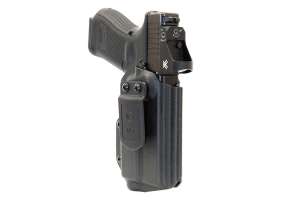
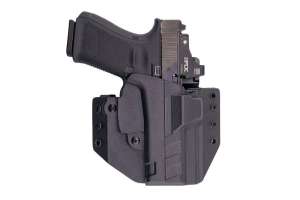
Holsters can be quite a bit trickier. While the supply lines have gotten more predictable in the last year or two, sometimes distributors don’t have what you want and you have to settle for what you can get with guns. Ideally, you would have a holster solution for every handgun in your shop. That’s not practical.
What you can do is have a holster for most of the guns in your shop, and offer special-order service to your customers while they are shopping. No matter what gun they ultimately choose, it’s unlikely that you won’t have something similar with a holster match that you can show them and offer to get for them.
Customers like when you make it easy for them, especially if they’ve already made the mistake of buying holsters online that they didn’t like as much once it arrived that have now been relegated to the “tub of misfit holsters” in the garage.
It may seem like a burden to provide that many holster options, and judging from the holster selection in a lot of shops I am in, that may be the case. The perceived value of a shop that is willing to make that investment, to show me the different holster options and carry options, and allows me to experiment with those options while in the store rather than making a half dozen online purchases before I find my solution — that’s where you set yourself apart.
Furniture
With ARs more than any other firearm, the ability to customize is what makes the platform so appealing to so many shooters. Some folks are constantly tinkering with the rifles, playing with setups, making adjustments, almost as a hobby within a hobby.
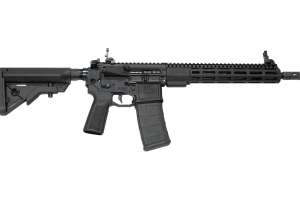
Often, however, looking at these highly customizable rifles on the rack, they are a monochromatic line of M-LOK handrails, adjustable stocks, and little else.
Having a different aesthetic makes something stand out. Find some furniture that isn’t as mainstream and present options to the customers. Some will try it with it just being on the shelf, and others may want to see it already installed.
The Hera Arms stock and foregrip may look familiar if you saw Chris Pratt’s The Tomorrow War on Amazon. The look might not be for everyone, but even those who think it isn’t for them are going to ask to see the rifle equipped with it. For me, I actually like the ergonomics of the foregrip. It can be used like an angled foregrip or more of a vertical, and it provides a solid grip on the front of the rifle. The buttstock, while untraditional, actually seats to the shoulder quite nicely with the smaller butt plate, focusing on what actually needs to be there.
Provide a different aesthetic and you’ll be surprised how much interest it gets.
Employee Action
Having shelves full of great accessories only does so much. What really makes the difference is when employees have bought into the idea of adding accessories to every firearm purchase that goes out the door.
It’s not uncommon for firearm companies to offer spiff bonuses to counter employees to help push firearms, and that practice is common among optics companies as well. As the items get smaller, though, the spiffs seem to disappear. This is a good place for you to fill in the gap.
Offering a commission on accessories is a good way to boost these sales. Even if you are using the margins of accessories to discount larger packages, you should be able to pull some of those extra dollars to the side to help incentivize your employees. A straight dollar commission or a percentage will work, it just depends on how you want to admin your system.
I think if it were up to me, I would work with a tiered percentage approach to the total customer purchase. For example, if a customer purchased a $500 handgun, but no accessories, there would be a 0% commission. For every accessory added, I would reward the employee with a 2% commission on the total pre-tax conversion, with a cap of 8%.
On that handgun purchase, it would be easy for the customer to leave with just the gun then head to the internet to make the accessory purchases. An employee motivated to add accessories to that sale can easily turn that $500 purchase into more than $1,000 with a pistol dot, light, and holster added to the cart.
Isn’t that worth a $60 investment on your part?
Incentivize Accessory Purchases
Motivated employees can only carry the baton so far if they aren’t given the proper tools to help move accessories. For better or worse, internet shopping is here, and it makes the life of a brick-and-mortar retailer just a little bit more difficult.
That said, you still have tools at your disposal.
Consider a stacking discount system for accessories when purchased with a firearm. A 5% discount that compounds with every accessory added, up to 15% off an accessory purchase, allows you create a significant in-store purchasing advantage they customer can’t find elsewhere.
Because these accessory items typically carry more margin than guns and ammunition, you have some wiggle room, even with a commission to the employee. When you consider the total amount of revenue increase you can create, it becomes a compelling strategy to try, and also keeps you from running into issues with any specific manufacturer MAP policies.
It Doesn’t Stop There
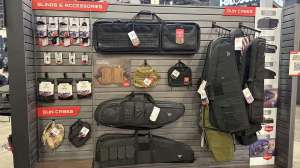
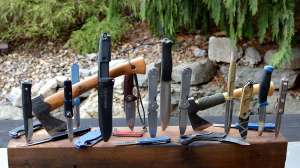
We didn’t talk about cases, safes, knives, tools, or a handful of other things that could very easily be part of any closing pitch to a customer. For every customer you see who knows exactly what they want and need, there are five that are looking for guidance and insight. That trust shouldn’t be abused, but it should absolutely be used to get them all the items they need as early in the process as possible.
I’ve spoken often about the effort to make your shop a resource for local shooters. What better way to do that than to offer all the items they need and provide the context of why they need it?