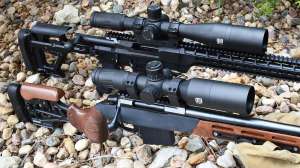
In all shooting scenarios, a firearm’s accuracy is directly tied to the steadiness of how the firearm is supported. When a rifle or handgun is sighted in at the range, it is rarely done freehand to ensure that the firearm’s point of impact aligns precisely to the crosshairs of an optic or the blade/notch of a sighting system. To achieve this at the bench, firearms are usually sand-bagged or held in a shooting rest to ensure that unnecessary motion or human error is minimized to maximize precision, accuracy and repeatability. If it is important at the range, it is just as important in the field.
For purposes of this article, a shooting system or “rest” can be loosely defined as any device used to hold a firearm, including anything from a rifle sling used to stabilize a firearm to the crotch of a tree to a sophisticated tripod with micro adjustments. These different rests all serve the same purpose: to reduce movement and stabilize a firearm, ensuring that accuracy maximized.
While having a rest is important, selection of the correct rest is also dependent on the shooting scenario in question. While some shooting systems are multi-purpose with adjustments that can provide a stable rest in any position from prone to standing, others are more specialized to provide the ultimate control for a singular position. With that in mind, two aspects are of the highest importance. First, you must understand the buyer’s use-case/needs, and second, you need to know what is available on the commercial market.
Multi-Purpose Stand-Alone Shooting Systems
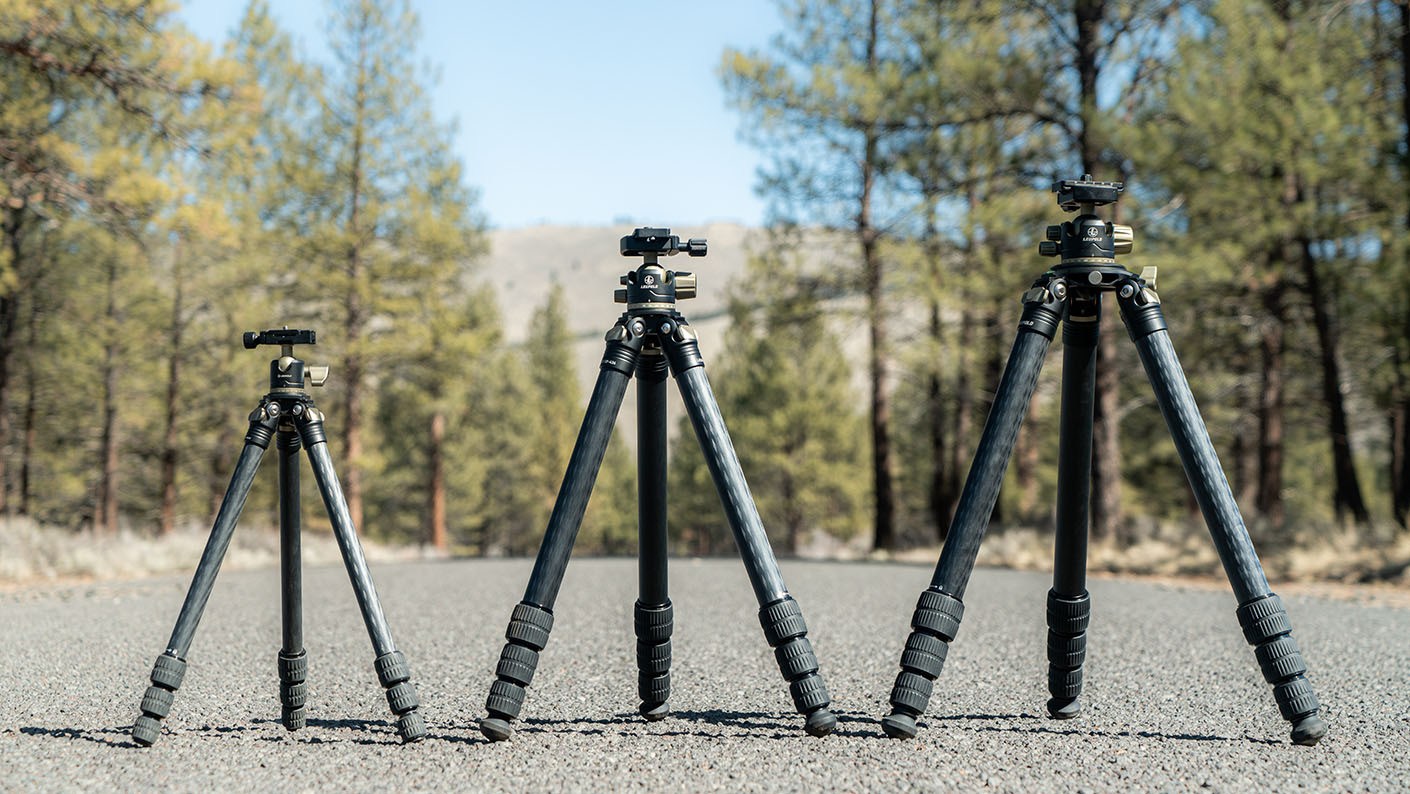
Multi-purpose stand-alone shooting systems consist of a tripod base that can be adjusted, in some cases, from a prone to a standing position. They are available in a variety of configurations and materials, including carbon fiber or aluminum legs with different styles of head styles and/or attachment points. While we are focused on tactical shooting systems, most of these systems are adaptations of camera tripods with some firearm-centric flare.
Carbon Fiber vs. Aluminum Legs: While both leg materials have served many shooters and photographers aptly over the years, there are specific differences that make choosing one over the other a common point of discussion. To help illustrate the differences, the table below breaks down each type’s benefit based on some discriminating criteria.
Criteria | Carbon Fiber Legs | Aluminum Legs |
Weight | X | |
Stiffness | X | |
Durability | X | |
Strength | X | |
Cost | X | |
Vibration Dampening | X |
While this table showcases the advantages of different types, there are also some caveats. Aluminum tripods are slightly heavier than carbon fiber and can help with stability. Additionally, due to the durability of aluminum, tripods made from aluminum are available with a wider range of minimum to maximum heights.
Head Style: While the leg type is important, even the best set of tripod legs will suffer if the tripod head is not up to snuff. The tripod head controls the ability to adjust a firearm into position, and much like a camera tripod, heads come in two main styles: pan and tilt and ball head, with variations including fluid and geared. While head type matters, it is equally important to select a head style that can support the weight of the firearm being used. All combination sets that include a tripod and head together specify a weight limit, but if a buyer is combining two independent components together, ensure that the head type selected can handle the weight.
· Pan and Tilt: As the name implies, this style of tripod head can pan and tilt in the X and Y direction but lacks the ability to control tilt or cast. This style is not a good choice for most tactical shooting scenarios, as it limits the ability to easily level a firearm without changing the length of each leg independently, which is both slow and cumbersome and can lead to inaccurate shots, especially at longer distances, if the rifle is not level.
· Fluid Head: Like a pan and tilt head, these, generally speaking, have no ability to adjust for cast or tilt. The benefit of a fluid head vs. a traditional pan head is that the “fluid” in this head offers superior control in both the X and Y direction and added strength. These are commonly used for videography, as motion is very smooth, using some resistance to reduce irregular motion. This resistance also allows for smooth movement of the firearm to track a moving target.
· Ball Head: This style of head can be adjusted in nearly every possible direction. Coupled with an optic level, regardless of the level of the tripod legs themselves, the firearm can be accurately made level in every situation The only issue with this style of head is that one knob controls all the motion, so you need to loosen it to a “sweet” spot that provides motion with friction to tune it into place or it will rapidly move. Once locked in, they are very solid, but if the target is in motion, they require constant adjustment that can become frustrating.
· Geared: Geared heads are not commonly found on shooting system tripods, but maybe they should be. Using gears, you can finely tune pan, tilt, and cant and lock them into place independent of one another for ultimate control. The motion control is very fine and slow, but also very accurate at moving a firearm’s position in small increments to fine-tune it onto a target.
Note: Some shooting systems are beginning to develop hybrids of these styles allowing them to take advantage of smooth fluid heads in the X and Y direction with a geared or ball head to finely adjust the rifles cant. These hybrids extract advantages of both types to create a tripod head that is geared to the need of tactical shooters, not just photographers and videographers.
Attachment Style: Attaching a firearm to a tripod shooting system can be accomplished using multiple methods. Two of the most popular include using a vice-style grip that clamps the rifle stock and the use of a quick-detach rail mount or Arca-style plate, like those used on the bottom of a camera, that is attached to a Picatinny rail or even to a sling swivel stud. The clamp-style is universal to any firearm, while the Arca-style requires additional components attached to the rifle. There are advantages/disadvantages to each, with many that can be argued as personal preference. One very important disadvantage of a clamp-style attachment is the inability to shoot in a prone position as easily as a rifle equipped with an Arca plate and low-profile tripod.
Kopfjager sells a full line of this style of shooting systems available with their own versions of clamp-style and rail mount options in both aluminum and carbon fiber. Their K800 carbon fiber includes a pan/tilt head that is a hybrid design and includes 22 degrees of cant adjustment in addition to the X and Y control. It adjusts from 7.4 to 65 inches in height and only weighs 3.85 pounds. They even sell an add-on leveling head to quickly make small adjustments up to +/- 15 degrees.
For prone shooting scenarios, benchtop tripods like the Slik Mini- Pro III work well. It has a minimum height just under 6 inches and weighs only 12 ounces with the included compact ball head. While it is designed for photography, tactical shooters have been leveraging these types of tripods for years with great success.
Bipods
Bipods have long served tactical shooters as a simple, yet effective way to quickly stabilize a firearm. This style of shooting system is generally regulated for prone to sitting shooting scenarios for attached systems, with some options for stand-alone bipods and variations. Attachment points for bipods vary greatly between brands, including everything from direct mount to a rifle’s sling swivel stud to specialized quick disconnects mounts. Like tripods, bipods are also available with different leg type options and other features.
For both hunters and tactical shooters, the most versatile of these systems, from an ease of height adjustment, are made by Harris Bipods and Caldwell. In addition to a direct to sling swivel attachment, they also make versions and adapters for more common tactical attachment systems like a Picatinny rail. Versions for prone that adjust from 6 to 9 inches and more multi-purpose options that go from about 12 to 27 inches are made by both companies. Caldwell’s XLA and all Harris Bipods can quickly adjust to different lengths using a push button, making them great for range days when timing is important. These models are great for rough height adjustments, but not as quick for finer adjustments.
Caldwell also sells a line of more tactical-geared bipods called the Accumax that has carbon fiber legs and an omni-directional ball mount for 360-degree panning. These bipods are designed for quick-connection to Picatinny or M-LOK/KEYMOD systems. They are available in multiple heights covering all seated and below shooting scenarios and have the ability for much finer adjustment.
While not commonly found among tactical shooters, quad or four-legged shooting sticks are an excellent, and fast, way to gain stability of a rifle. This style of shooting stick is very common in European hunting circles and starting to gain popularity in the U.S. They are being mentioned here because they certainly have tactical capability, despite being somewhat under the radar. Stable Sticks makes multiple versions in this style for standing and sitting positions. This shooting system supports both the front and the rear of the rifle, providing very steady, almost rock-solid, support and is well worth a look.
Other Types
In addition to tripod and bipod systems, there are other tried-and-true shooting systems that have been proven in the field and at the range. Some of these options include conventional “sand-bag” systems, shooting platforms, etc. To best showcase these different options and their benefits, we have complied a list of top-selling items that every store should consider stocking.
Birchwood Casey Tac Match Bag Set
Designed for tactical rifles of all types, these bags offer multiple configurations to accommodate high-capacity magazines and different elevations, and they come pre-filled. Each set comes with both a front and rear bag and can be used in the field and at the range. With many different ways to deploy them, they are extremely versatile for different shooting scenarios and environments.
Allen Alpha Tactical Folding Shooting Rest
A simple, but effective rest for the front of the rifle, this folds flat for transport and quickly deploys into a triangle shape that is 8 inches tall but weighs only a few ounces. These are great for obtaining a quick rest in the field when shooting in the prone position.
Birchwood Casey Rear Rifle Support
While most rests focus on the front of the rifle, don’t forgot about the rear. This item is lightweight and very easy to deploy, and it steadily supports the buttstock of the rifle. It can be adjusted for height, and when it’s coupled with a bipod, shooters can really stabilize their firearm in the prone position on uneven surfaces.
Web Slings
While pointing to no singular brand, web slings have long been a quick and effective way to stabilize a rifle by virtually locking the rifle to the shooter’s body for improved stability. While the premise can be accomplished with virtually any sling, there are specific styles made for stabilization. Do a quick web search to find videos and illustrations for proper use/instruction.
Caldwell The Rock Jr.
Slightly heavier than other items mentioned above, The Rock Jr. excels in adjustment. Featuring a “geared” elevation adjustment with locking mechanism, The Rock Jr. allows for fast height adjustments in the prone position or on the bench, just like its big brother.
Summary
Tactical shooting systems come in many shapes and sizes, ranging from complex systems to simple rests. To best serve a customer, it is important to understand how they intend to use it, what level of versatility they are looking for, and what firearms they intend to use it on. For multi-purpose use, a tripod system has the most versatility but is also the most cumbersome and most expensive. On the other hand, if the shooting scenario is prone, a simple bag system or front and rear rest may suffice. With so many options to choose from, it is important to have the basics on hand to showcase the benefits and expand your choices as you learn what your customers need.