
In the wake of the ATF's recent "stop enforcing" announcement regarding certain NFA items, retailers are left wondering what they're allowed to do, how they're supposed to interpret their state regulations, and what's next. Tactical Retailer spoke to Ammunition Depot CEO Dan Wolgin to get his perspective on what's happening and how his company is navigating these uncharted waters.
Tactical Retailer: Please spell out for retailers, in your own words, what exactly has changed on a federal level.
Dan Wolgin: Two major things have happened this year.
First, on January 1, the $200 making and transfer tax on suppressors, short-barreled rifles, short-barreled shotguns, and Any Other Weapons (AOW) dropped to zero. That saved customers money, but it didn’t eliminate the registration or approval process.
Then, on October 9, the ATF announced that it would stop enforcing certain National Firearms Act registration and approval requirements for those items. This followed a Texas federal court ruling and the Justice Department’s decision not to appeal.
For retailers, that potentially changes the entire purchasing experience. Instead of waiting for traditional NFA approval, certain transactions can now be handled more like conventional firearm transfers, using Form 4473 and the required background check.
But there’s an important distinction. The NFA hasn’t been repealed. The federal government has simply changed what it will enforce. The Gun Control Act still applies, licensed dealers still have responsibilities, and state laws haven’t automatically changed.
There are also some additional federal considerations for short-barreled rifles and shotguns that the ATF is still working through.
It’s a major change, but it’s not a free-for-all.
How can retailers tell if their state laws still restrict suppressors, SBRs, and SBSs?
That’s one of the biggest challenges right now.
The ATF can change its federal enforcement policy, but that doesn’t automatically change individual state laws. Some states have relatively few additional restrictions, while others specifically require these items to be federally registered or possessed in compliance with the NFA.
That creates a real question. If the federal government is no longer enforcing registration requirements, does an unregistered suppressor satisfy a state law that requires compliance with federal law? In some states, the wording is pretty clear. In others, it isn’t.
I spent considerable time researching this and developed an interactive map covering all 50 states and Washington, D.C. It includes suppressors, short-barreled rifles, short-barreled shotguns and Any Other Weapons. Rather than just labeling everything legal or illegal, the map shows where additional requirements apply, where the law appears restrictive, and where questions remain. It also includes the statutes and supporting information behind the classifications.
Retailers can explore it at: https://www.ammunitiondepot.com/nfa-state-law-map
I want to emphasize that I’m not an attorney, and the map isn’t a substitute for legal advice. It’s a research resource to help retailers and their customers identify the issues and find the relevant laws. If you’re uncertain about a state’s requirements, confirm them with qualified counsel or the appropriate authorities before making a transfer.
If my state has no restrictions, can I actually sell these items now without the formerly required licensing?
That depends on what you mean by licensing, and it’s an important distinction.
The ATF is no longer enforcing the traditional NFA advance-approval and registration requirements for the covered items. For suppressors and AOWs, the ATF now says dealers should generally process eligible transfers under the Gun Control Act, including Form 4473, background checks, and required records. But you still need the appropriate Federal Firearms License to engage in the business, and the Special Occupational Tax requirements haven’t gone away. The ATF has made that clear.
Another wrinkle involves short-barreled rifles and shotguns. The Gun Control Act has a separate transfer-authorization requirement. The ATF is temporarily declining to enforce that provision while it develops a new process.
So I wouldn’t advise a retailer to assume that because the Form 4 approval requirement is no longer being enforced, they can immediately start selling everything without reviewing their licenses, SOT obligations, and state requirements. This is where getting proper guidance matters. The opportunity is there, but retailers need to handle transactions correctly.
How do you expect this to affect demand for suppressors, SBRs, SBSs, and Any Other Weapons?
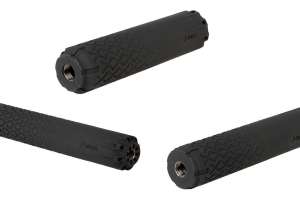
I expect the biggest opportunity to be in suppressors.
Think about what discouraged customers in the past. The $200 tax, additional paperwork, fingerprints, uncertainty about approval times, and the waiting period before receiving the product discouraged customers. The tax is now zero, and in states where the new transfer process applies, some of those other barriers may be significantly reduced. That’s going to get people’s attention, especially first-time buyers who have considered owning a suppressor but never wanted to deal with the process.
I also think we’ll see more interest in suppressor-ready firearms, threaded barrels, mounting systems, and related accessories. At Ammunition Depot, we’re already expanding our threaded-barrel selection because we expect more customers to want to prepare firearms they currently own.
I expect demand for short-barreled rifles and shotguns to benefit as well, though remaining legal and transfer questions could slow that. AOWs are a more specialized market.
I wouldn’t put a number on the growth yet. We’re only days into this change, and retailers are still adapting. The interest is real, but how much of that turns into sales will depend on how quickly the industry can simplify the process.
How have you seen retailers adapting to the “new normal?”
I think the industry is moving quickly, but there’s still a lot to figure out.
We’re experiencing that firsthand at Ammunition Depot. Our existing suppressor program uses a fulfillment partner that handles the traditional Form 4 process and home delivery. That process is still running, so we won’t suddenly change how customers receive their orders without having everything worked out. We expect to see changes in the coming weeks.
At the same time, we’re exploring selling and distributing suppressors through eligible local firearms dealers, potentially giving customers a much simpler pickup option. That means looking at dealer networks, verifying licensing and SOT status, improving checkout, and figuring out how to handle transactions that may follow different procedures depending on the customer’s state.
We’re also reviewing how the changes could affect pricing, fulfillment costs, and margins.
I suspect many retailers are asking similar questions. Do we continue with our existing process? Do we add a new option? Do we carry more inventory? Which dealers can accept these transfers? My view is that retailers that get compliance and customer experience right will be best positioned to benefit. We can make buying these products much easier, but it won’t happen automatically just because the ATF issued new guidance.
What are the pitfalls and potential wrinkles or problems retailers should watch out for in the coming weeks and months?
I’d put state-law compliance at the top of the list. The easiest mistake a retailer could make is reading the October 9 announcement and assuming that every NFA item can now be sold the same way in every state. That’s simply not the case.
Some states still prohibit certain items. Others have exceptions tied to federal registration. A transaction that works in one state may not be permissible in another, and transferring an item without confirming the receiving dealer’s qualifications creates additional risk.
Retailers also need to remember that the Gun Control Act remains in effect. That means the appropriate licenses, SOT obligations, background checks, paperwork, and recordkeeping still matter.
Then there are the operational questions. What happens when a customer wants traditional registration? How do you handle orders placed under the old process? What happens if a transfer can’t be completed? What happens when someone buys an unregistered item and later wants to take it to another state?
One other concern is what happens down the road. Current federal policy relies on enforcement discretion, and the ATF has acknowledged that future legal or policy changes could affect unregistered items. There isn’t a general guarantee that those items could simply be registered later.
For retailers, I think the smartest approach is to take advantage of the opportunity without getting ahead of the rules.
We’re excited about what these changes could mean for the industry, but I’d rather spend a little more time getting the process right than create a problem for a customer later.